Reverse Burnout in Women in the Workplace
For HR & ERG Leaders · Corporate Wellness · Women's Leadership
Why neuroaesthetic wellness experiences outperform conventional corporate programming — and what that means for your ERG, People team, or leadership offsite budget.
Picture a woman on your team. She's reliable. She delivers. She showed up to the last wellness workshop, filled out the survey, and said it was great. She is also running on empty — and has been for longer than she'll admit in a one-on-one.
She's not alone. The data on women in the workforce right now tells a story that a meditation app subscription isn't going to resolve.
59%of women report burnout, vs. 46% of men (Gallup 2024-25)
3×more likely to leave when burned out (Gallup 2024-25)
82%of tech employees are near burnout (Spill and CharlieHR)
These numbers don't move because most corporate wellness programming isn't designed to move them. The programming addresses surface-level stress. The problem runs deeper — into the neural and physiological systems that chronic depletion has quietly disrupted over months, sometimes years.
There's a science for this. It's called neuroaesthetics. And its implications for how we design wellness experiences for women are direct.
What Neuroaesthetics is and Why it Matters
Neuroaesthetics is the study of how beauty, art, and sensory experience measurably change the brain, body, and behavior. The research base spans Johns Hopkins University's International Arts + Mind Lab, University College London, USC, and others. It has moved well past "emerging" into established science with specific, measurable outcomes.
A few findings worth sitting with:
Making art for 45 minutes significantly reduces cortisol levels — regardless of creative skill level. This is a physiological outcome, not a subjective one. Guided breathwork and somatic grounding engage the parasympathetic nervous system, producing measurable shifts from stress-state to rest-state. Focused creative activity quiets the brain's default mode network — the same network responsible for rumination, self-critical thinking, and the cognitive noise that depletes executive function.
Sensory engagement activates reward systems that release dopamine and serotonin, the brain's primary mood-regulation chemicals. And co-regulation in small, intimate groups allows nervous systems to mirror collective calm — a neurological phenomenon that simply cannot be replicated at scale.
Johns Hopkins research further shows that aesthetic experiences simultaneously alter a complex network of neurological and biological systems — from respiratory and circulatory to immune and muscular — producing measurable biological change across multiple systems at once.
"If we were to design a tool from scratch to improve learning, health, and overall well-being, it would look like the arts."
— Susan Magsamen, International Arts + Mind Lab, Johns Hopkins University
Beyond immediate stress relief, sustained engagement with aesthetic experience produces structural brain changes. Research shows art-based interventions can modulate cortical excitability and increase gray-matter volume in regions tied to emotional regulation — building the kind of resilience that doesn't just feel better for a day but rewires how a person handles complexity over time.
Where conventional corporate wellness falls short
Most People teams are doing their best with the standard playbook. The gap isn't effort or intention — it's category. The standard playbook addresses surface stress while leaving the underlying neural depletion completely untouched.
Performance contexts don't allow genuine rest
Team happy hours, group fitness classes, most workshops — these are performance contexts. Attendees are still managing how they appear, how they contribute, how they're perceived. The nervous system cannot genuinely rest in a performance context. It can only switch performance modes. The body knows the difference, even when the mind doesn't register it consciously.
Digital wellness tools use the same channel as the problem
Meditation apps and virtual wellness platforms are consumed on the same devices — often in the same environments — that are driving the depletion. Genuine restoration requires physical separation and sensory input from a different channel entirely. The brain needs a different door.
Group size shapes what's neurologically possible
Wellness research is consistent on this: large group programming activates social performance instincts and reduces psychological safety. The neurological conditions for genuine restoration require a group small enough that every woman in the room feels seen. For corporate teams, that means designing for intimacy rather than scaling for headcount.
What a neuroaesthetic wellness experience looks like in practice
The most effective corporate wellness programs for women right now are moving toward multisensory, embodied experiences — ones that engage multiple sensory and emotional modalities simultaneously. Research shows this approach amplifies the neuroplastic response beyond what isolated cognitive tasks can achieve.
Forward-thinking organizations are building dedicated wellness spaces that pair ambient sensory design with guided creative intervention. Studies on programs integrating movement, guided breathing, and ambient soundscapes have shown a 25% increase in reported employee satisfaction and a significant decrease in absenteeism. Programs pairing aromatherapy with ambient music have demonstrated measurable cortisol reduction. Participants in multisensory breaks show a 15% increase in heart rate variability — a key marker of improved autonomic regulation.
One corporate art-based program reduced burnout scores by 18% over six months. A design-driven workplace environment study showed a 30% rise in reported job satisfaction. These aren't soft metrics. They're outcomes tied to the specific neural mechanisms that neuroaesthetics targets.
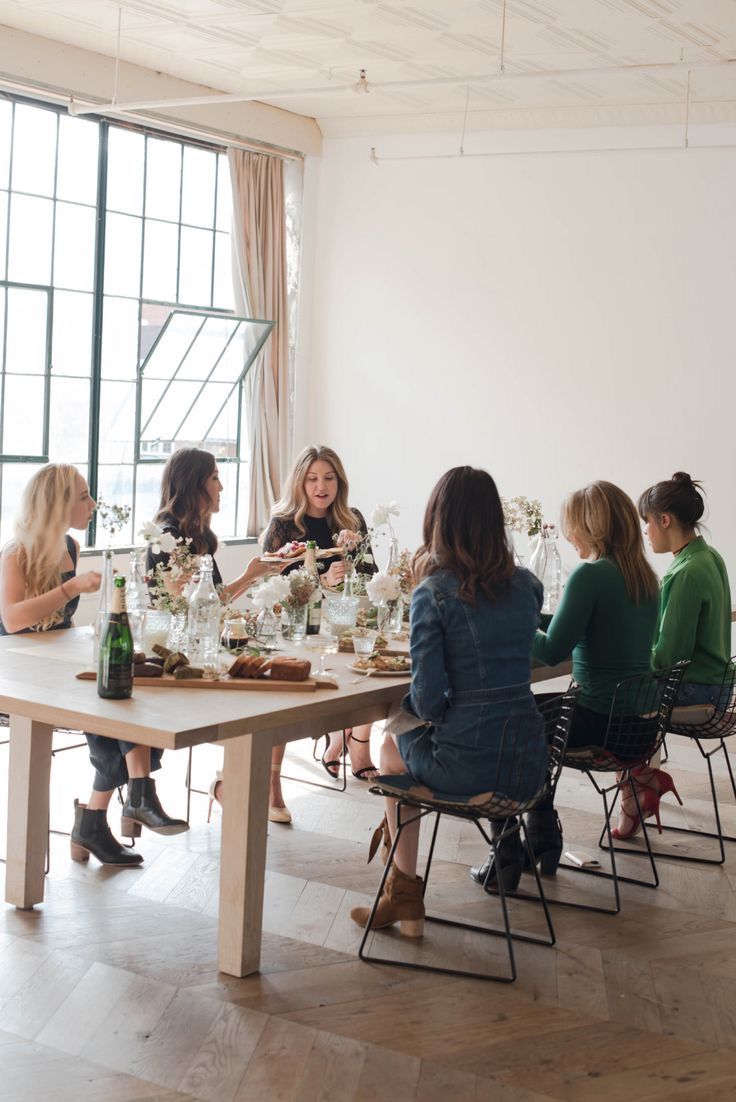
At Linger & Savor, we build our corporate events on exactly these principles — expert-guided breathwork and somatic grounding, guided sensory tasting, expressive painting on linen canvas, and full atmospheric curation. Small groups, off-screen, unhurried. The design choices are intentional at every level. The research is the blueprint.
A practical question for People leaders
If your current wellness programming isn't moving the burnout numbers — and for most teams, it isn't — the question worth asking isn't "what else can we add?" It's "are we addressing the right level of the problem?"
Women experiencing chronic workplace depletion don't need more content. They need experiences that work at the level of the nervous system. The science on what that looks like is now clear enough to act on.
That's a different category of investment. And for the women on your team who have been running on empty, it's a meaningful one.