
What Happens to You When You Finally Slow Down
There is a version of your life that moves at full speed, every single day. Notifications, deadlines, decisions. Meals eaten while scrolling. Music playing in the background of something else. Wine poured but not really tasted. Beauty passing by, unremarked.
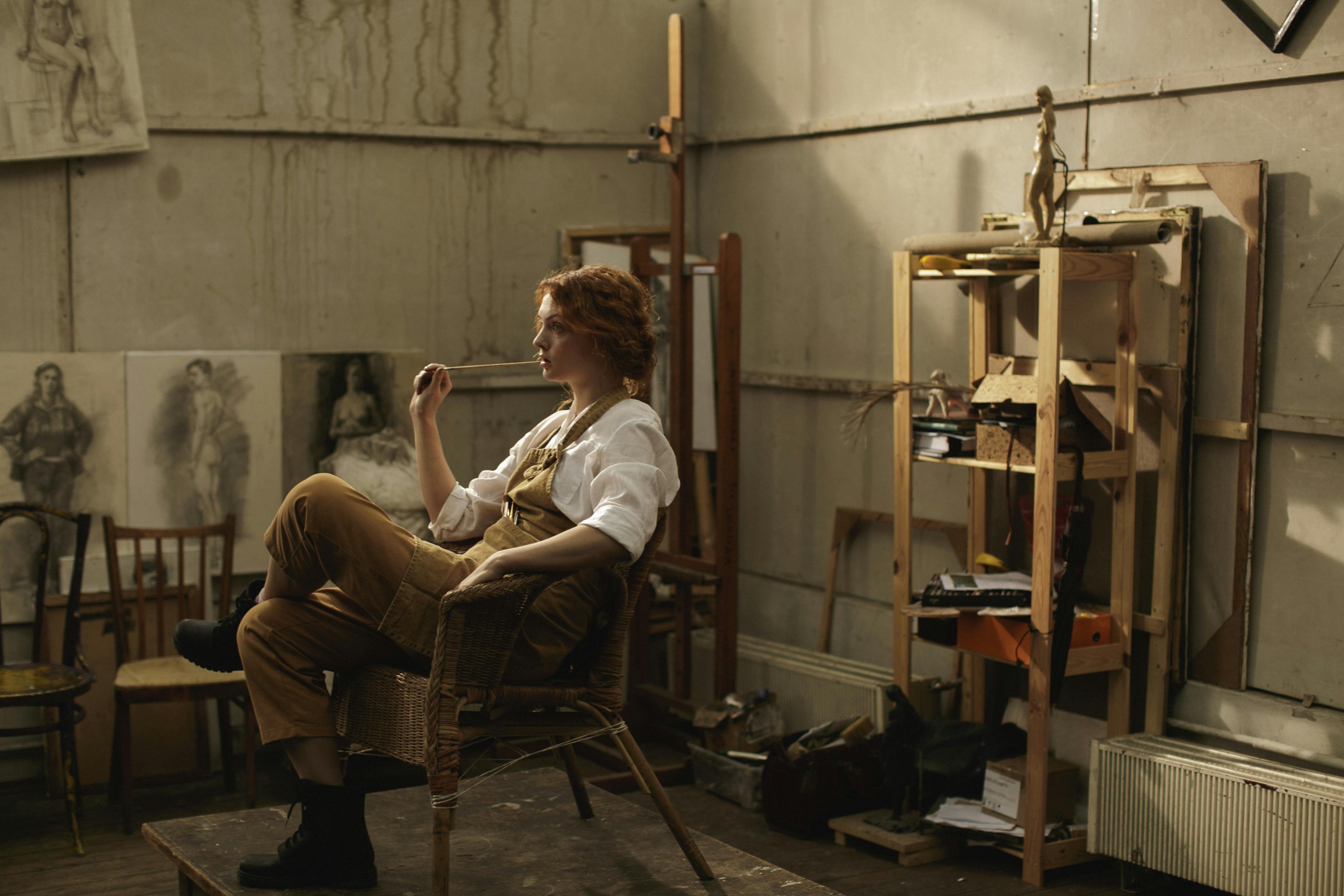
Most of us live here. I did too. Until the stress of it all forced me to stop. To reconnect to the creative person I had always been.
I slowed down. Way down. I picked up the paintbrush. I sat in the grass. I closed my eyes and listened deeply to the music.
What I found on the other side of that slowness wasn't what I expected. It wasn't rest, exactly. It was something more alive than that.
The Science Has a Name
Neuroaesthetics. It's the study of how our brains and bodies respond to beauty, art, and aesthetic experience — and the findings are not soft or optional. They're neurobiological.
Susan Magsamen, founder of the International Arts + Mind Lab at Johns Hopkins University School of Medicine, puts it plainly: "Science is now proving what artists have known for millennia — our brains and bodies are wired for art."
Wired for it. Not entertained by it. Not soothed by it, occasionally, if you happen to have time. Wired for it the way we're wired for connection, for meaning, for survival.
When you engage with something beautiful — truly engage, not scroll past it — your brain's reward circuits activate. The same pathways involved in joy, in love, in the deepest kinds of pleasure. Beauty releases dopamine. It lowers cortisol, the stress hormone that quietly dismantles your health when it stays elevated too long. After just 45 minutes of making art, measurable cortisol reduction occurs. One or more art experiences a month has been linked to extending your life by a decade — the same reduction in biological aging as regular physical activity.
What Slowing Down Actually Does to You
We live in a culture that treats slowness like a flaw. Hustle is the virtue. Efficiency is the goal. But the brain doesn't perform in a void — it performs in a context. And the context most of us have built for ourselves is actively working against us.
Researcher Anjan Chatterjee at the University of Pennsylvania studies how art affects the brain. He notes that the average museum visitor spends about 27 seconds looking at a single piece of art. Twenty-seven seconds. He asks his students to look at one work for fifteen full minutes instead — and what happens is remarkable. They become more present. More emotionally engaged. More connected to themselves. "We live in such a manic, transactional world, and we don't know how to be present," Chatterjee says. "Art can get people to slow down and can be a tool for self-discovery."
Slow looking is a neurological event, not a personality trait. When you give sustained attention to something beautiful — a painting, the way light falls through a window, the color of wine held up to candlelight — you activate what neuroscientists call the default mode network: the part of the brain where memory, emotion, and meaning converge. It's the part of you that is most fully you. Most of us never get quiet enough to hear it.
Your Senses Are Trying to Tell You Something
Smell informs up to 75% of your emotions. The aroma of something — wine, fresh flowers, warm food, rain on warm pavement — reaches you before anything else does. It bypasses cognition entirely and lands directly in the limbic system, the emotional center of the brain.
This is why walking into a beautifully set room feels different from walking into a fluorescent one. Why a meal eaten slowly, mindfully, with attention to texture and taste, nourishes you in ways that the same food eaten at your desk cannot. Why soft music changes the quality of the air around you. Why candlelight does something that overhead lighting simply doesn't.
These are not indulgences. They are inputs. Your nervous system is reading the room — every room, every moment — and calibrating accordingly.
[Your personal example here — a specific sensory moment you remember vividly: a glass of wine, a piece of music, an evening that made you feel restored.]
Singing and humming activate the vagus nerve, the main highway of the parasympathetic nervous system — the part of you that knows how to rest. Music increases synapses and gray matter. Working with your hands stimulates nerve endings in ways that make you feel present and focused within minutes. The body knows what it needs. We've just stopped listening.
Creating Something Changes You
There's a particular kind of quiet that comes from making something with your hands.
I've experienced it [your example here — painting, a creative act, a moment of making]. The mind, which had been running its usual loop of tasks and what-ifs, simply goes somewhere else. Something settles. It's not escape — it's more like arrival.
The neuroscience backs this up: when you look at a brushstroke, your motor cortex activates as if you made the mark yourself. The body participates in what the eyes see. Loose, expressive marks engage more of the viewer's body than controlled, precise ones. The act of creating — the physical gesture of it — is felt. By you, and by anyone who looks at what you made.
When environments invite this kind of focused creative attention, they do something specific to the brain: they quiet the rumination that most of us carry as background noise all day. The inner critic. The to-do list. The ambient anxiety. Not by suppressing it — by giving the brain something more present to do.
This is why a guided painting session, done in the right conditions, can feel more restorative than a night of Netflix. The brain isn't passive. It's engaged, absorbed, temporarily freed from the loop.
Beautiful Spaces Are Not Decorative — They're Neurological
In the 1960s, neuroscientist Marion Diamond conducted a now-famous experiment: she placed rats in different environments — some sparse, some richly sensory — and after a few weeks, the brains of the rats in enriched environments had measurably more mass. The cerebral cortex had thickened by 6%. The less-stimulated brains had actually lost mass.
We've since replicated this with humans.
The implications are not small. The spaces we inhabit are not backdrops — they are conditions. Lighting, scent, sound, texture, proportion — each one is priming your brain before anything else happens in a room. This is why the same conversation feels different depending on where it takes place. Why you think differently on a walk than you do at a desk. Why certain rooms make you feel held, and others make you want to leave.
"Enriched environments — surroundings that enliven our senses through colour, shape, smell, pattern, touch and sight," writes Magsamen, "can actually increase our brain mass."
We have, as a culture, engineered beauty out of most of our daily environments. And then we wonder why we feel so depleted.
The Practice of Paying Attention
None of this requires grand gestures. It requires presence.
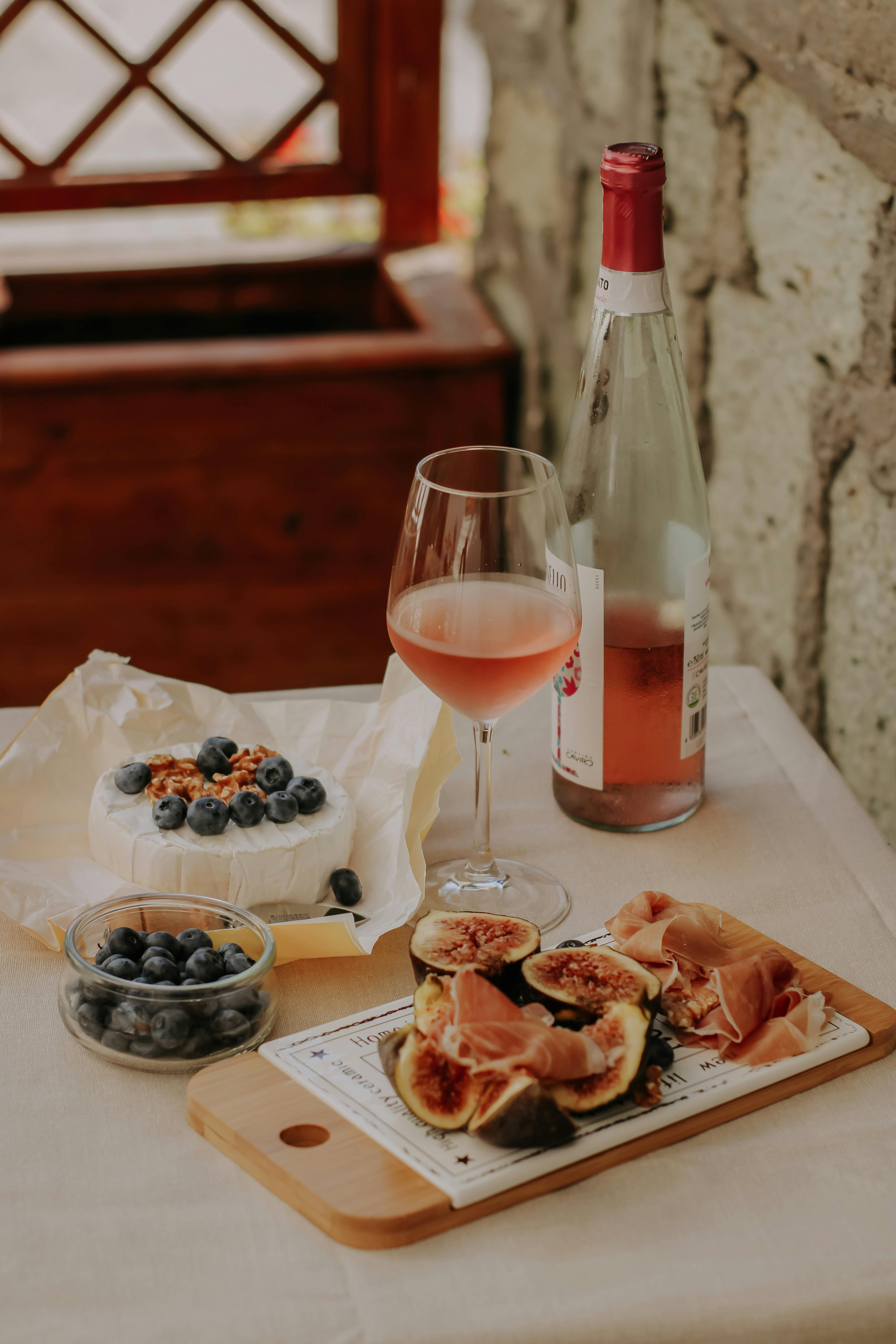
It's the difference between drinking wine and tasting it — actually noticing the color before you bring it to your lips, the way the aroma opens, the texture on your palate, the finish that lingers. It's a glass of something beautiful, engaged with slowly, that becomes an entirely different experience than the same glass consumed on autopilot.
It's twenty minutes of making something with your hands. A slow walk where you actually look. A room with fresh flowers and a candle lit for no occasion in particular. Music chosen deliberately, not just played. A meal set at a table with care.
These are not luxuries. They are inputs your nervous system is waiting for.
"The arts and aesthetic experiences," writes Magsamen, "are imperative for our individual and collective health." Not nice-to-have. Not a reward for after you've finished being productive. Imperative.
You Were Not Built to Run at This Pace Forever
The research is consistent: regularly engaging with beauty — making it, beholding it, inhabiting it, tasting it, listening to it — changes your biology. It lowers stress markers, extends life, sharpens cognition, builds emotional resilience. It reconnects you to the part of yourself that knows what you actually feel and what you actually need.
The question isn't whether you have time for beauty. The question is whether you can afford to keep going without it.
[Your personal closing reflection here — what this practice has meant to you, and what you're building with Linger & Savor as an answer to that question.]
Because here's what I know: when a woman sits down at a beautifully set table, pours a glass of something worth savoring, picks up a brush, and breathes — something in her nervous system exhales. Not because it's a nice evening. Because her brain finally got what it was asking for all along.
Beauty isn't a reward. It's a requirement.